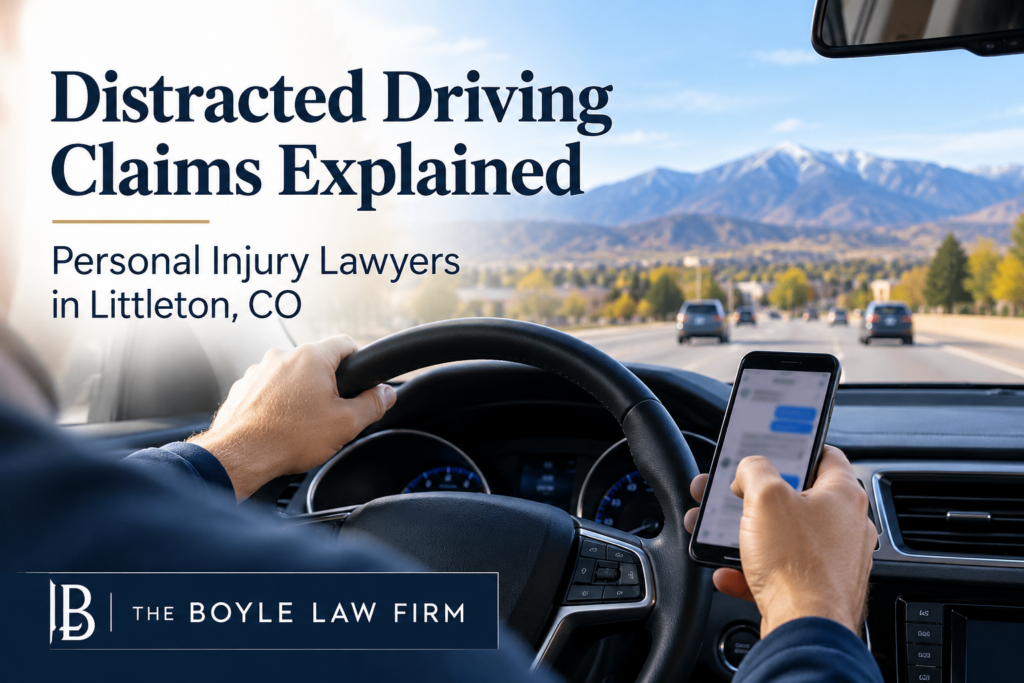
A driver looks down at a phone. Moments later, you are dealing with a damaged vehicle, medical appointments, and questions about who will collect your children from school. When a crash interrupts family life, understanding your legal options should not add to the strain.
Colorado’s hands-free driving law has brought renewed attention to distracted driving. For injured Littleton residents, the practical question is what happens when another driver’s distraction causes harm. Knowing what to document and when to hire a personal injury lawyer in Littleton, CO, can help you approach the claims process with clearer expectations.
Why Distracted Driving Remains a Current Colorado Concern
In March 2026, the Colorado Department of Transportation reported that a Cambridge Mobile Telematics analysis found a 4.7% decline in distracted driving from 2024 to 2025. The same release noted that Colorado State Patrol investigated 3,778 crashes involving inattentive drivers in 2025. These statewide findings show progress while highlighting an ongoing problem.
For a family recovering from a collision, those numbers cannot explain who will cover physical therapy or missed paychecks. An injury claim requires evidence about the individual crash, the injuries it caused, and the losses that followed.
What Colorado’s Hands-Free Law Means for Drivers
Colorado’s expanded restrictions took effect January 1, 2025. Adult drivers may not hold or manually use a mobile electronic device while driving unless an exception applies. Hands-free accessories are permitted.
CDOT explains that the restrictions also apply when stopped at a traffic light or in traffic. Holding a phone on speaker does not make its use hands-free. Exceptions include reporting emergencies and certain other circumstances specified by law.
A Phone Violation Does Not Automatically Resolve a Claim
A civil injury claim requires proof that someone owed a duty of care, breached that duty, and caused injuries and losses. Evidence of phone use may help establish negligent conduct, but the connection between that conduct and the crash still matters.
For example, imagine a driver checking a message before striking a vehicle waiting at an intersection. Witness observations and video might help establish what happened. Medical records would address the resulting injuries. Each piece serves a different purpose.
Evidence to Preserve After a Distracted Driving Crash
Your immediate priorities are safety, emergency assistance when needed, and appropriate medical care. Once those needs are addressed, consider preserving the following information without putting yourself at risk:
- Photographs of vehicle damage, road conditions, and the surrounding scene
- Witness names and contact information
- The police report number and responding agency’s details
- Original dashcam recordings and other relevant files you already possess
- Medical records, bills, and correspondence from insurers
Keep originals intact and make backup copies. Write down what you personally observed, separating it from what someone else told you. If you did not see a phone, describe the driver’s actions without guessing about the cause.
Ask About Video and Phone Records Early
Tell your attorney about nearby businesses or vehicles that may have recorded the collision. Ask whether preservation requests are appropriate since recordings may be overwritten.
Phone records are more complicated. An attorney can evaluate whether relevant records may be obtained through lawful procedures. Access is not automatic, and a call log alone may not establish who used the device or whether its use caused the crash.
Document How Injuries Affect Your Family
An injury claim should reflect the harm supported by the evidence. Depending on the circumstances, recoverable damages may include medical expenses, lost earnings, reduced future earning ability, and pain and suffering. Colorado law also recognizes other categories of harm where the evidence supports them.
Keep a practical record of what has changed. Save pay statements showing missed work and note medical appointments. Describe specific limitations, such as difficulty lifting your child, driving, or standing through a work shift. Accurate details help explain the impact of an injury.
If your child was injured, discuss the child’s claim separately with an attorney. Ask what records are needed and whether special procedures apply. Avoid assuming that one family member’s settlement will resolve everyone’s injuries.
Hire Personal Injury Lawyer in Littleton, CO: Questions to Ask
Choosing counsel begins with understanding how your case would be handled. During a consultation, ask:
- Who will investigate the crash and communicate with me?
- What evidence could help address disputed fault?
- How will you evaluate ongoing treatment and future losses?
- How are attorney fees and case expenses handled?
- What happens if settlement negotiations are unsuccessful?
Someone reviewing a Littleton car accident claim should receive an explanation of the investigation and the information still needed. No responsible assessment can guarantee a settlement amount before the relevant facts are understood.
Bring the documents you have, along with your questions. You do not need to organize a perfect case file before asking for help. Explain any difficulty obtaining records or attending appointments, so the conversation reflects your actual circumstances.
Review Settlement Terms Before Signing
A payment may seem helpful when bills are arriving but consider whether the proposed settlement accounts for ongoing care and other documented losses. Ask which claims the release covers and what accepting it would mean for additional recovery. Understanding those terms is particularly important when treatment is continuing.
The Boyle Law Firm helps injured individuals and families in Littleton understand their options and pursue compensation. Our personal injury services include investigating accidents, communicating with insurers, and preparing cases for litigation when needed. Contact our firm for a free consultation to discuss your next steps.